
Marco Island Fixer-Uppers: Smart Investment?
Thinking of buying a fixer-upper in Marco Island, FL? Discover the hidden costs, FEMA rules, and neighborhood trends to maximize your luxury real estate ROI.
7/3/20267 min read
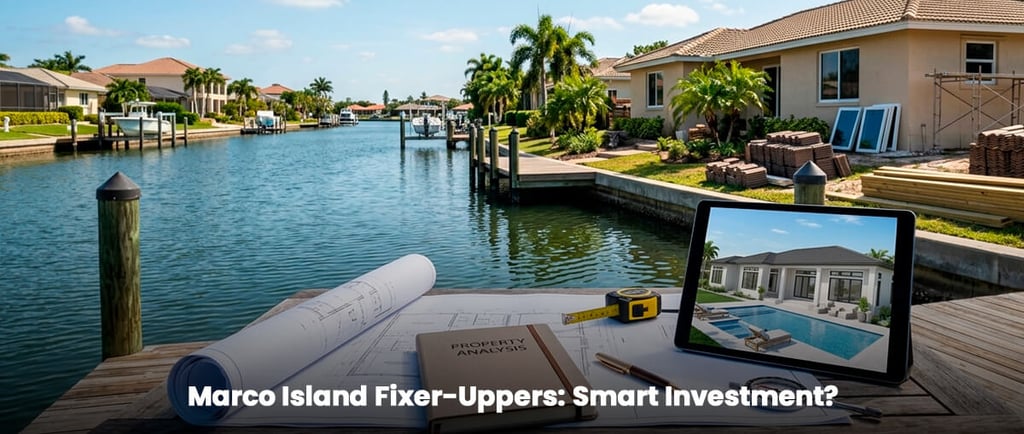
There is something undeniably intoxicating about the idea of buying a fixer-upper on Marco Island. You find an older, slightly dated property nestled along our pristine canals, imagine stripping away the 1980s pastel tiles, adding a gorgeous custom pool deck, and walking away with a luxury estate worth double what you put into it.
As a realtor working deeply within the Naples and Marco Island markets, I hear this dream from investors and homebuyers almost every single week. Everyone wants a piece of Southwest Florida paradise, and buying a property that needs a little love seems like the most financially savvy way to make it happen.
But is a Marco Island fixer-upper actually a smart investment?
The short answer is: Yes, but only if you know how to navigate the highly unique regulatory and environmental landscape of coastal Florida.
Flipping or renovating a home on a barrier island is fundamentally different from remodeling a property inland. Today, I am pulling back the curtain on what it really takes to turn an island fixer-upper into a profitable goldmine, the hidden traps that catch out-of-state investors off guard, and how to evaluate if a property is worth your time and capital.
The Irresistible Allure of Marco Island Real Estate
To understand the investment potential, we first have to look at the macro-dynamics of our local market. Marco Island is the largest of Florida’s Ten Thousand Islands, offering a blend of casual beachfront luxury, world-class boating, and unparalleled privacy. We are a land-enclosed community; they simply aren't making any more island land. This permanent scarcity of inventory provides a natural floor for property values.
When you buy a property that needs work here, you aren't just investing in the physical structure of wood, concrete, and drywall. You are purchasing the dirt, the water rights, the proximity to Tigertail Beach or South Marco Beach, and the direct access to the Gulf of Mexico.
Historically, buyers have been willing to pay a massive premium for fully updated, turnkey homes. This creates a tempting valuation gap—the difference between a dated, original-condition home and a modernized luxury estate is often hundreds of thousands of dollars. That gap is where your profit margin lives.
The Make-or-Break Regulatory Factor: The FEMA 50% Rule
If you take only one piece of advice from this guide, let it be this: You cannot evaluate a Marco Island fixer-upper without completely understanding the FEMA 50% Rule.
Because Marco Island is a low-lying barrier island prone to tropical weather, the Federal Emergency Management Agency (FEMA) enforces strict regulations on structures built below the current base flood elevation. Most of the older fixer-uppers on the island—specifically those built before the early 1990s—do not meet modern flood height requirements.
The FEMA 50% Rule states that if a home is below the base flood elevation, the cost of any improvements, renovations, or repairs cannot exceed 50% of the structure's market value (excluding the value of the land).
An Expert Example: If you buy an older waterfront property where the county assesses the physical house structure at $200,000 (and the rest of your purchase price is wrapped up in the valuable lot), you can legally spend a maximum of $100,000 on renovations. If your dream kitchen, new flooring, and roof repairs total $105,000, the local building department cannot issue your permits unless you bring the entire home up to modern flood codes. Bringing an old home up to code usually means physically elevating the entire house onto stilts, which can cost an absolute fortune and instantly kill your investment return.
Before you submit an offer on any property that looks like a bargain, I always work with my clients to secure a certified elevation certificate and consult with local structural engineers. To learn more about how these flood maps are calculated and updated, you can explore official resources directly via the FEMA Flood Maps portal.
Hidden Costs of Island Renovations
Beyond the structural regulations, the physical logistics of renovating a home on an island introduce unique line items to your budget that you won't encounter in landlocked markets.
1. Seawall and Dock Integrity
If you are looking at a canal-front home, the state of the seawall is infinitely more important than the state of the kitchen. A cracked, bowing, or failing concrete seawall can cost anywhere from $50,000 to well over $100,000 to replace. Furthermore, getting marine contractors scheduled on the island requires patience. Always budget for a professional dive inspection of the underwater seawall cap before closing.
2. The Rising Cost of Wind Mitigation
Florida’s building codes are among the toughest in the nation, and for good reason. When you renovate an older home, you will likely need to upgrade to impact-rated windows and doors, or install hurricane shutters that meet current wind-borne debris codes. Additionally, if the roof has passed its ten- or fifteen-year mark, your insurance carrier may require a full replacement to issue a homeowners policy.
3. Supply Chain and Labor Premiums
Getting materials and specialized labor onto an island involves minor logistical premiums. Subcontractors driving onto the island daily from greater Naples or Fort Myers often factor travel times into their bids. Material deliveries can also carry localized surcharges. When calculating your renovation budget, I always recommend adding a safety contingency cushion of at least 20% to account for these coastal market realities.
Where to Look: High-Potential Marco Island Pockets
Not all neighborhoods on the island treat fixer-uppers equally. To maximize your return on investment, you want to target areas where the surrounding property values will easily support the cost of your upgrades.
The River Area: Located on the north end of the island, this area features some of the oldest homes on Marco. The major benefit here is quick, unrestricted boating access to the Gulf without bridging. If you find a solid mid-century home here with a healthy seawall, the upside potential is massive.
The Inland Clusters: If waterfront living isn't a strict requirement, inland fixer-uppers offer a much lower barrier to entry. These properties make fantastic seasonal vacation rentals or entry-level homes for families wanting access to the top-tier Marco Island charter schools and parks like Mackle Park.
The South End: Highly coveted for its proximity to Caxambas Pass and the main beach access points. Properties here command premium dollar, meaning your renovated asset will appeal directly to ultra-luxury buyers.
For official updates on local zoning, permits, and neighborhood planning maps, it is highly beneficial to look directly at the City of Marco Island Building Services guidelines to ensure your renovation plans align with city codes.
Step-by-Step Playbook for Investing Safely
If you want to protect your capital and ensure your project is a success, you should follow a rigid, data-driven sequence before buying:
Analyze the ARV (After Repair Value): Look at what beautifully renovated homes of similar size and location are selling for right now. This is your target ceiling.
Order a Tri-Partite Inspection: Do not settle for a standard home inspection. You need a dedicated home inspection, a specialized seawall/marine inspection, and a detailed roofing/wind mitigation assessment.
Run the FEMA Calculation: Work with the property's elevation certificate to determine your legal spending ceiling under the 50% rule.
Quote Insurance Pre-Closing: Secure builder's risk insurance quotes and future homeowner policies early. Understanding your carry costs while the property sits under construction is vital to your net profit calculations.
To keep track of broader state-level market trends, inventory shifts, and regional property data, I frequently cross-reference data points provided by Florida Realtors Market Data, which provides excellent analytical context for our regional growth.
Frequently Asked Questions
Can I legally flip a house on Marco Island without living in it?
Yes, you can absolutely purchase, renovate, and sell investment properties on Marco Island without making them your primary residence. However, keep in mind that non-homesteaded properties do not qualify for the Florida "Save Our Homes" property tax assessment cap, meaning your carrying costs via property taxes will reflect full market value during the project.
How does the 50% FEMA rule affect remodeling an older condo?
The FEMA 50% rule applies to the specific building structure. For multi-story condo buildings, the rule is evaluated based on the entire building structure rather than your individual unit. However, individual condo associations on Marco Island have incredibly strict rules regarding renovation hours, contractor parking, and material guidelines that can impact your timeline.
Is it better to buy an inland or waterfront fixer-upper for ROI?
Waterfront fixer-uppers consistently yield a higher total dollar return because water access drives the highest demand in our market. However, they carry significantly higher risks and upfront costs (seawalls, docks, strict flood zones). Inland fixer-uppers offer a safer, more predictable project with lower overhead, making them excellent options for first-time island investors.
What are the current rental restrictions on Marco Island for renovated properties?
If your long-term strategy is to renovate and rent, you must comply with the City of Marco Island’s short-term rental ordinances. This includes mandatory registration, transient rental occupancy limits, and adherence to specific noise and parking rules. Additionally, always check individual HOA or deed restrictions, as some neighborhoods place strict minimums on rental durations.
The Verdict: Is It a Smart Move?
Ultimately, Marco Island fixer-uppers are an extraordinary, highly lucrative investment—but they are not a casual weekend hobby. They are institutional-grade projects disguised as charming beach houses.
When you navigate the numbers correctly, respect the local building departments, and buy for the location rather than the structure, the financial rewards can change your entire real estate portfolio. The key is never doing it alone. You need local boots on the ground who know these canals, understand the city codes, and can spot a structural red flag before you ever sign a contract.
If you want to look at the current available inventory of fixer-uppers, tear-downs, or diamond-in-the-rough properties here on Marco Island or down the road in Naples, let's connect. I would love to help you run the numbers and find a project that aligns perfectly with your financial goals.
@dianavnaples / (239) 641 9379
Tags: Marco Island real estate, Marco Island fixer upper, Investing in Marco Island, Naples FL real estate investment, FEMA 50 percent rule Florida, Southwest Florida home flipping, Marco Island waterfront homes, Florida barrier island investing, Coastal renovation costs Florida, Marco Island canals property, Buy a house in Marco Island, Diana Villareal Realtor, Naples real estate authority, Seawall inspection Marco Island, Florida building code renovations, Tigertail Beach real estate, River Area Marco Island, Mackle Park neighborhood, Marco Island vacation rental investment, South Marco Beach homes, Coastal home ROI, Florida wind mitigation inspection, Luxury home flipping tips, Caxambas Pass real estate