
FEMA Elevation Rules for Marco Island Building
Master FEMA elevation rules, flood zones (AE vs. VE), and the 50% rule for building or remodeling on Marco Island, FL. Expert insights from Realtor Diana Villarreal.
7/8/20265 min read
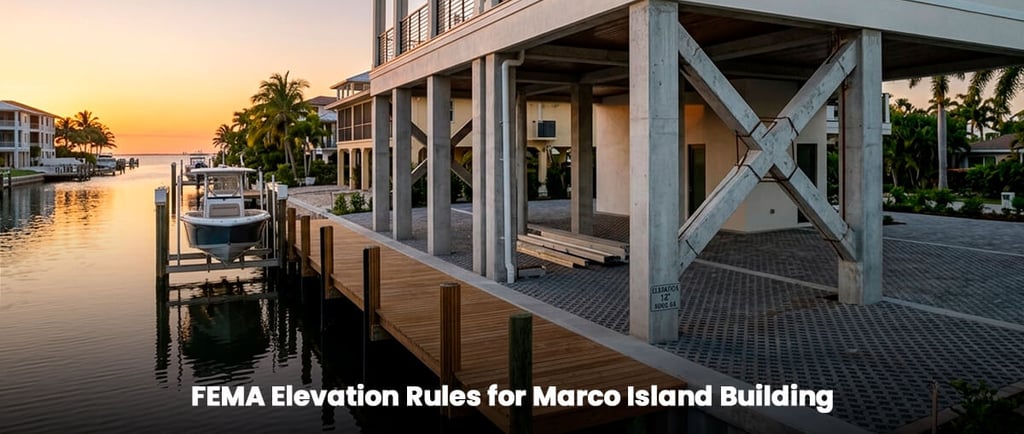
Building your dream home or remodeling an existing property on Marco Island is an incredible investment, but it requires a deep understanding of our unique coastal landscape. Almost every square inch of Marco Island sits within a FEMA-designated Special Flood Hazard Area (SFHA). This means that local building codes, structural engineering, and final project costs are completely tethered to federal and municipal flood compliance.
As a realtor specializing in the Naples, Marco Island, and Bonita Springs markets, I guide buyers, sellers, and builders through these complex regulations daily. If you are planning a project on the island, understanding FEMA’s structural footprint is your first and most critical step. Here is everything you need to know to build safely, maintain compliance, and protect your equity.
The Core Foundation: AE Zones vs. VE Zones
Before drawing up blueprints, you must identify your lot's specific flood zone by consulting the official FEMA Flood Map Service Center. On Marco Island, you will primarily encounter two high-risk zones, each demanding vastly different construction methods.
Zone AE: Inland and Canal-Front Properties
The majority of Marco Island's interior and canal-front parcels fall into Zone AE. This zone indicates a high risk of rising water but without significant, high-velocity wave action. For homes in Zone AE, the core mandate is elevating the finished living space to or above the Base Flood Elevation (BFE). Traditional slab-on-grade construction or stem walls can be used here, provided the home is high enough. Lower enclosed areas can exist below the flood line, but they must be strictly non-habitable and equipped with certified hydrostatic flood vents to let water flow through freely.
Zone VE: Coastal and Gulf-Front Real Estate
Properties directly facing the Gulf of Mexico or highly exposed waterways are designated as Zone VE. This is the strictest and most expensive zone in the building code because it accounts for wave action—specifically, breaking waves three feet or higher during a base flood event. In Zone VE, slab foundations are entirely prohibited. Your home must be engineered on an open foundation system using concrete or steel pilings driven deep into the ground. Furthermore, the elevation rule changes: instead of measuring to the top of your finished floor, the entire lowest horizontal structural member (the bottom of the floor support beam) must clear the flood line.
The Local "Freeboard" Mandate
FEMA establishes the minimum baseline, but local municipalities have the authority to enforce stricter rules. According to the City of Marco Island Floodplain Management office and Collier County ordinances, all new construction and substantial improvements must include a minimum of one foot of "freeboard."
Freeboard is simply an additional safety buffer built on top of the established BFE. For instance, if your lot carries a FEMA BFE of 9 feet, local codes require your regulatory elevation to be at least 10 feet.
As a real estate advisor, I always tell my clients that building even higher than the local freeboard mandate is a smart financial move. Under FEMA's current insurance model, Risk Rating 2.0, every single foot of elevation you add above the minimum requirement dramatically slashes your annual flood insurance premiums, often by 40% to 80%. It also adds immense resale value, as future buyers will prioritize heavily fortified properties.
The Pitfalls of the FEMA 50% Rule for Remodeling
If you are buying an older, charming home on Marco Island with plans to renovate, you must familiarize yourself with the Substantial Improvement and Substantial Damage regulation, universally known as the 50% Rule. This rule catches more coastal buyers off-guard than any other real estate law.
The rule states that if the cost of your proposed remodeling, addition, or repair project equals or exceeds 50% of the market value of the structure before work begins, the entire home must be brought into full compliance with current FEMA elevation rules.
Crucial Distinction: The 50% calculation applies strictly to the market value of the building structure itself, completely excluding the value of the land.
On Marco Island, where land value represents the massive lion's share of a property's total purchase price, a $900,000 older home might feature a lot worth $750,000 and a structure valued at just $150,000. If your renovation budget exceeds $75,000, you have triggered the 50% rule. If that older home sits below the current required BFE, you will be legally forced to physically elevate the entire house onto pilings or tear it down and build new. To navigate this safely, always work with an experienced contractor and check the Collier County Floodplain Management FAQ guidelines during your due diligence period.
Essential Documentation: The Elevation Certificate
You cannot obtain a building permit, major renovation approval, or a proper flood insurance quote on Marco Island without an Elevation Certificate (EC). This official document is prepared by a licensed land surveyor and details your property’s exact geographic coordinates, flood zone, and the precise height of various structural elements relative to the NAVD 88 vertical datum.
During new construction, surveyors will actually visit the site multiple times to certify the building height at different phases: first based on construction drawings, then once the lowest floor is poured or framed, and finally upon finished completion.
Questions & Answers
How do I find out the exact flood zone and BFE for my Marco Island property?
You can look up your property address using the official FEMA Flood Map Service Center online, or you can submit a request directly to the City of Marco Island Building Services Division. They maintain historical records of local Elevation Certificates for many existing island homes.
Can I build an enclosed garage or storage space below the Base Flood Elevation?
Yes, but with very strict limitations. In both AE and VE zones, any space below the required flood elevation can only be used for parking, building access, or limited storage. In Zone AE, the walls can be solid but must feature hydrostatic flood vents. In Zone VE, the lower enclosure must be built with breakaway walls designed to collapse under the pressure of moving waves without damaging the main structural columns supporting your home.
Does the FEMA 50% rule apply to aesthetic upgrades like painting and landscaping?
No. Certain costs can be excluded from the substantial improvement calculation, such as exterior landscaping, painting, minor non-structural cosmetic maintenance, and the cost of bringing existing health or sanitary code violations up to safe standards. However, all structural work, finishes, built-in appliances, labor, and overhead must be included in the evaluation.
Why is building on Marco Island more expensive than building on the mainland?
Elevating a structure adds specialized engineering costs, deep piling foundations, extensive soil stabilization, and specialized marine-grade materials designed to withstand intense salt-air exposure and hurricane forces. Building an elevated home on the island can add anywhere from $50,000 to over $150,000 to your foundation budget compared to a standard slab build on the mainland, but it is an absolute necessity for protecting your coastal asset.
Navigating Your Next Steps
The regulatory environment on Marco Island is designed to ensure our community remains resilient for generations to come. While these FEMA rules can feel overwhelming, partnering with the right local professionals transforms the process into a seamless, highly rewarding journey.
Whether you are looking to purchase a vintage coastal home to transform, seeking the perfect lot for a custom build, or trying to understand the compliance status of your current property, I am here to provide the local market authority and clear guidance you deserve. Connect with me today, and let's position your next Southwest Florida investment for ultimate safety and long-term appreciation.
@dianavnaples / (239) 641 9379
Tags: FEMA rules Marco Island, Marco Island building codes, Florida coastal construction, Special Flood Hazard Area, Base Flood Elevation Florida, AE Zone building requirements, VE Zone pilings, FEMA 50 rule real estate, Marco Island remodeling laws, Collier County floodplain management, Southwest Florida real estate, Diana Villarreal Realtor, Coastal engineering Florida, Elevation Certificate Marco Island, Flood insurance Risk Rating 2.0, Island home building costs, Breakaway walls requirements, Finished floor elevation, Substantial improvement rule, Luxury waterfront construction, New construction Marco Island, Home elevation savings, Gulf Coast storm surge protection, Freeboard requirements Collier County, Building a home in Florida flood zone, Waterfront property investment.